Thursday, March 08, 2012

NB2 8/3/12


 Grammarbank 5d: homework
In order to do something
For the purpose of doing something:
Samuel trained every day in order to improve his performance.
In order to understand how the human body works, you need to have some knowledge of chemistry.

To
 Used to show a purpose or intention:
They left early to catch the 7.30 train.
To find out more about university courses, write to this address.
We need more money to improve transport in London.

It is hard to believe/imagine/see/know etc
It was hard to see what else we could have done.
It's hard to believe that anyone would say something like that.
Find it hard to do something
I was finding it hard to concentrate.
Permanent jobs are hard to come by (=difficult to find or get).

It is interesting to see/know etc
It will be interesting to see what happens when he gets a bit older.
It's interesting that no one remembers seeing the car.

 It doesn't matter,  spoken
a) Used to tell someone that you are not angry or upset about something, especially something that they have done:
'I've spilled some coffee on the carpet.' 'It doesn't matter.'
b) Used to say that you do not mind which one of two things you have:
'Red or white wine?' 'Oh, either. It doesn't matter.'

Not mind
 [intransitive, transitive not in progressive or passive] especially British English if you do not mind what someone does or what happens, you do not have a strong opinion about it:
'Do you want to go out now or later?' 'I don't really mind.'
Not mind what/who/where etc
I don't mind where we go.
 Never mind spoken (don’t worry)
a) used to tell someone not to worry or be upset about something:
'We haven't done very well, have we?' 'Never mind. At least we tried.'

I like learning new things.
I’d (would) like to learn to play chess.

promise  / ˈprɒmɪs/
have /hæv/ , weak forms /həv/ , /əv/
throw 1 /θrəʊ/

Good at (doing) something
Alex is very good at languages.
She's good at making things.
Bad at (doing) something
I'm really bad at chess.
They have got to be the worst band on the planet.
It’s impossible to talk to her when she gets angry.
For me it’s impossible   NOT to buy when I go to that shop.
She decided to stay home.
She decided NOT to go.


Negation in modal verbs :
Won’t, can’t, couldn’t, may/might not, mustn’t, shouldn’t, wouldn’t...

Needn’t, don’t need to

Don’t have to

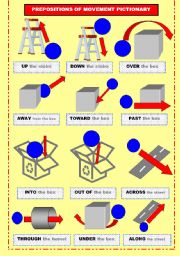
Go / walk / move / run / jump / fall / drive / get ... to / up / down / into / towards...

Who cares!

Ready, steady, go !

Tuesday, March 06, 2012

nb2 6/3/12


Stairs: go upstairs /downstairs ≠ ladder
Playground
Corridor
Roundabouts
Baker’s (shop)
Butcher’s
Greengrocer’s
Chemist’s
Jewellery
Star the car
Car park
Parking space
The main door
see, watch, look atSee means to notice something with your eyes, either deliberately or accidentally• I saw a great film last week.• A few people saw him take the bag.Watch means to deliberately pay attention to something for quite a long time• They were all watching the game on TV.• He watched her leave.When you look at something, you deliberately turn your eyes towards it in order to see it• There was a loud noise and everyone looked at the screen.!! You can see something on television or watch television, but do not say 'see television'• After I finish my homework I usually watch television.➔ See also see
One-null /nʌl/
exciting /ɪkˈsaɪtɪŋ/
final 1 / ˈfaɪnlʲ/
stadium / ˈsteɪdiəm/
despair 1 /dɪˈsper / || /dɪˈspeə(r)/
intense /ɪnˈtens/
ecstatic /ɪkˈstætɪk/
whistle / ˈwɪsəl/
unforgettable / ˈʌnfərˈɡetəbəl / || / ˌʌnfəˈɡetəbəl/

Monday, March 05, 2012

ni2 5/3/12


APPRECIATE [transitive] used to thank someone in a polite way or to say that you are grateful for something they have done:
Thanks ever so much for your help, I really appreciate it.
I appreciate your concern, but honestly, I'm fine.
I'd appreciate it if you let me get on with my job.

WORD CHOICE: 

clothes, clothing, garment, cloth
Clothes are things that you wear, for example shirts and dresses• I need some new clothes. • Do you ever wear your sister's clothes?!! Clothes is always plural and has no singular form• He was wearing nice clothes (NOT a nice clothe/clothes).Use clothing to talk about a particular type of clothes or when talking about making or selling clothes• Special protective clothing is worn.• a clothing manufacturer!! This word is not used much in ordinary spoken language• I went shopping for summer clothes (NOT clothing).In formal English, you can use garment or piece / item / article of clothing to refer to one thing you wear• a long velvet garment• a discarded article of clothing
But it is more usual to name the particular thing you mean• He was wearing a long coat (NOT long garment).Cloth is the material that clothes are made from• a suit made from fine woollen cloth

Good riddance (to somebody)
Spoken a rude way of saying you are glad someone has left:
She was awful. Good riddance to her, I say!

Food poisoning [uncountable]
A stomach illness caused by eating food that contains harmful bacteria, so that you vomit

WORD FOCUS: doctor
Similar words:   physician especially AmE, GP (general practitioner)    British English, consultant, registrar
A doctor who does operations:    surgeon
A doctor who treats mental illnesses:    psychiatrist, psychotherapist, shrink    informal
A doctor who treats people's teeth:       dentist, orthodontist
A doctor who treats animals:        vet, veterinarian         especially AmE
Someone who is training to be a doctor:        medical student, intern American English
The place where you go to see your doctor:  surgery     British English, office         American English

Accident and emergency [countable] British English
The room or department in a hospital where people go if they have an accident or suddenly become ill [= A & E; = emergency room AmE]

prin‧ci‧ple
1
moral rule
 [uncountable and countable] a moral rule or belief about what is right and wrong, that influences how you behave:
Schools try to teach children a set of principles.
He prided himself on his high moral principles (=strong ideas about how it is right or wrong to behave)
He's got no principles at all!
He refused to give me any more money as a matter of principle.
against somebody's principles
It's against my principles to accept gifts from clients.
man/woman of principle (=a man or woman with strong moral ideas)
He considered himself to be a man of principle.

Morcilla: sustantivo femenino blood sausage (AmE), black pudding (BrE)

throw somebody/something ↔ out 
phrasal verb
1 to get rid of something that you do not want or need:
We usually throw out all our old magazines.

Stool [countable]
1 a seat that has three or four legs, but no back or arms:
A bar stool

Claim
1
Truth
 [Transitive] to state that something is true, even though it has not been proved
Claim (that)
The product claims 'to make you thin without dieting'.
Claim to do/be something
No responsible therapist will claim to cure your insomnia.
I don't claim to be a feminist, but I'd like to see more women in top jobs.

IQ [countable]
Intelligence quotient
Your level of intelligence, measured by a special test, with 100 being the average result:
An IQ of 130

Lobby past tense and past participle lobbied, present participle lobbying, third person singular lobbies [intransitive and transitive]
To try to persuade the government or someone with political power that a law or situation should be changed
Lobby for/against
The group is lobbying for a reduction in defence spending.
Lobby somebody to do something
We've been lobbying our state representative to support the new health plan.

Ad‧mi‧ra‧ble formal
Having many good qualities that you respect and admire:
An admirable achievement

radical 1 / ˈrædɪkəl/
phobia / ˈfəʊbiə/
irrational /ɪˈræʃnʲəl / || /ɪˈræʃənlʲ/
principle / ˈprɪnsəpəl/
eco-friendly / ˌiːkəʊˈfrendli/
fundamental / ˈfʌndəˈmentlʲ/
efficient /ɪˈfɪʃənt/
friendly 1 / ˈfrendli/
consume /kənˈsuːm / ||/kənˈsjuːm/
raw 1 /rɔː/
destruction /dɪˈstrʌkʃən/
fiber, (BrE) fibre / ˈfaɪbər / || / ˈfaɪbə(r)/
wheatgerm / ˈhwiːtdʒɜːrm / || / ˈwiːtdʒɜːm/
comfortable / ˈkʌmftərbəl / || / ˈkʌmftəbəl/
cheerful / ˈtʃɪrfəl / || / ˈtʃɪəfəl/
physically / ˈfɪzɪkli/
figure 1 / ˈfɪɡjər / ||/ ˈfɪɡə(r)/


Thursday, March 01, 2012

nb2 1/3/12


Homework: grammar bank 6A p.137 and vocabulary: confusing verbs p. 149 ex 2.
young 1 /jʌŋ/
journey 1 / ˈdʒɜːrni / || / ˈdʒɜːni/
bored /bɔːrd / || /bɔːd/

…and they lived happily ever after (fueron felices…)
Partridge / ˈpɑːrtrɪdʒ / || / ˈpɑːtrɪdʒ/ (perdiz)

Know: (saber quien es esa persona)
Be familiar with somebody/something [transitive not in progressive] to be familiar with a person, place etc:
I've known her for twenty years.
 Are you really thinking of leaving Kevin for a guy you barely know?
 Do you know the nightclub on the corner of Maine Street?
 I don't know him very well.
 We're still getting to know each other really.

Meet: (conocerla la primera vez que os veis)
See somebody for the first time
 [intransitive, transitive not in passive] to see and talk to someone for the first time, or be introduced to them:
We met in Florence.
I met my husband at university.
Jane, come and meet my brother.

Bor‧row [intransitive and transitive]
1 to use something that belongs to someone else and that you must give back to them later [↪ lend, loan]:
Can I borrow your pen for a minute?
Borrow something from somebody
You are allowed to borrow six books from the library at a time.
They borrowed heavily (=borrowed a lot of money) from the bank to start their new business.
! Do not confuse borrow (tomar prestado) and lend (dejar) (=give someone permission to use something of yours): I borrowed his bike/He lent me his bike. | Can you lend me your pen/can I borrow your pen?


Queue 1 /kjuː/ cola
Surprisingly /səˈpraɪzɪŋli/
Captain 1 / ˈkæptən / || / ˈkæptɪn/
Aeroplane / ˈerəpleɪn / || / ˈeərəpleɪn/
Engineer 1 / ˌendʒɪˈnɪə(r)/
Reputation / ˈrepjʊˈteɪʃən/
directly /daɪˈrektli/
towards [tə'wɔ:dz, tɔ:dz]
Crash
1
Car/plane etc
 [Intransitive and transitive] to have an accident in a car, plane etc by violently hitting something else [↪ collide]:
The jet crashed after take-off.
Crash into/onto etc
The plane crashed into a mountain.
Crash a car/bus/plane etc
He was drunk when he crashed the car.

Spill past tense and past participle spiltespecially British English or spilled especially American English
1 [intransitive and transitive] if you spill a liquid, or if it spills, it accidentally flows over the edge of a container [↪ pour]:
' class=pronsentence title="British English" onclick="openSoundPlayer('6/MED.pronsentence-p008-001668506.mp3', 'pronsentence', 40721, 0);" v:shapes="_x0000_i1035"> Katie almost spilled her milk.